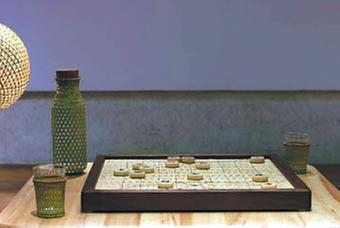
Chinese Chess
Introduction
Chinese Chess, known as Xiangqi in Chinese, is one of the most popular board games in China. It is a strategy game for two players and is commonly played in several Asian countries, including Vietnam, where it is known as Co Tuong. Chinese Chess has deep cultural roots and is often associated with intellectuality and strategy, akin to Western chess.
Historical Background
The exact origins of Chinese Chess are debated, but it is believed to have evolved from the ancient strategy game of Liubo. Chinese Chess in its current form was likely developed during the Tang Dynasty (618-907) and has since become an integral part of Chinese culture. Historical documents suggest that the game has been played for centuries, and it was likely influenced by military strategy, as its pieces emulate ancient Chinese troops and the board represents a battlefield.
Board and Pieces
The board of Chinese Chess is rectangular with a 9×10 grid and no alternating colors, unlike the checkerboard pattern in Western chess. The board is divided into two sides, each representing a player's territory, with a "river" running horizontally between the two sides. The pieces are placed on the intersections of the grid lines rather than within squares.
Each player commands an army consisting of 16 pieces: one General, two Advisors, two Elephants, two Horses, two Chariots, two Cannons, and five Soldiers. The General is analogous to the king in Western chess, and the objective of the game is to checkmate the opponent's General.
Gameplay
The game begins with the pieces arranged on the board in a specific starting formation. Players alternate turns, moving their pieces according to specific rules. Each piece type has its own method of movement, adding layers of strategy to the game.
General: The General can move one point orthogonally within the confines of the "palace," a 3×3 area on each player's side of the board.
Advisors: Advisers also move one point diagonally and remain within the palace.
Elephants: Elephants move exactly two points diagonally and cannot cross the river. Their movement is blocked if an intervening point is occupied.
Horses: Horses move one point orthogonally and then one point diagonally outward. Their movement can be blocked by pieces immediately adjacent orthogonally.
Chariots: Chariots move any number of points orthogonally, similar to rooks in Western chess.
Cannons: Cannons move like chariots but capture by leaping over a single piece, friend or foe.
Soldiers: Soldiers move one point forward and can move sideways after crossing the river.
The primary objective is to checkmate the opponent’s General, rendering it unable to escape capture.
Cultural Significance
Chinese Chess is more than just a pastime; it is a cultural emblem of strategic thinking and is often seen in parks and public squares across China. It is also a common subject in Chinese literature, reflecting themes of war and strategy. Playing Chinese Chess requires logical thinking, foresight, and the ability to anticipate an opponent’s moves, mirroring the skills valued in traditional Chinese philosophies.
Modern Developments
Today, Chinese Chess continues to thrive, with national and international competitions held regularly. It has adapted to modern times with online platforms allowing players from around the world to engage in matches. The game has also inspired computer programs that play Chinese Chess at high levels, contributing to the field of artificial intelligence and game theory.
Chinese Chess remains an enduring cultural tradition that bridges the historical and the contemporary, reflecting the richness of Chinese culture and the timeless appeal of strategic games.








